
Book Appointment Now
The Difference Between Fish Collagen and Bovine Collagen
Collagen has become one of the most popular ingredients in the global health and wellness industry. From beauty supplements and protein powders to functional beverages and sports nutrition products, collagen peptides are widely used for their nutritional and functional benefits. Among the many collagen sources available on the market, fish collagen and beef collagen are currently the two most commonly used types. Although both provide high-quality collagen protein, they differ in several important aspects, including source, absorption, taste, application, and target market positioning.
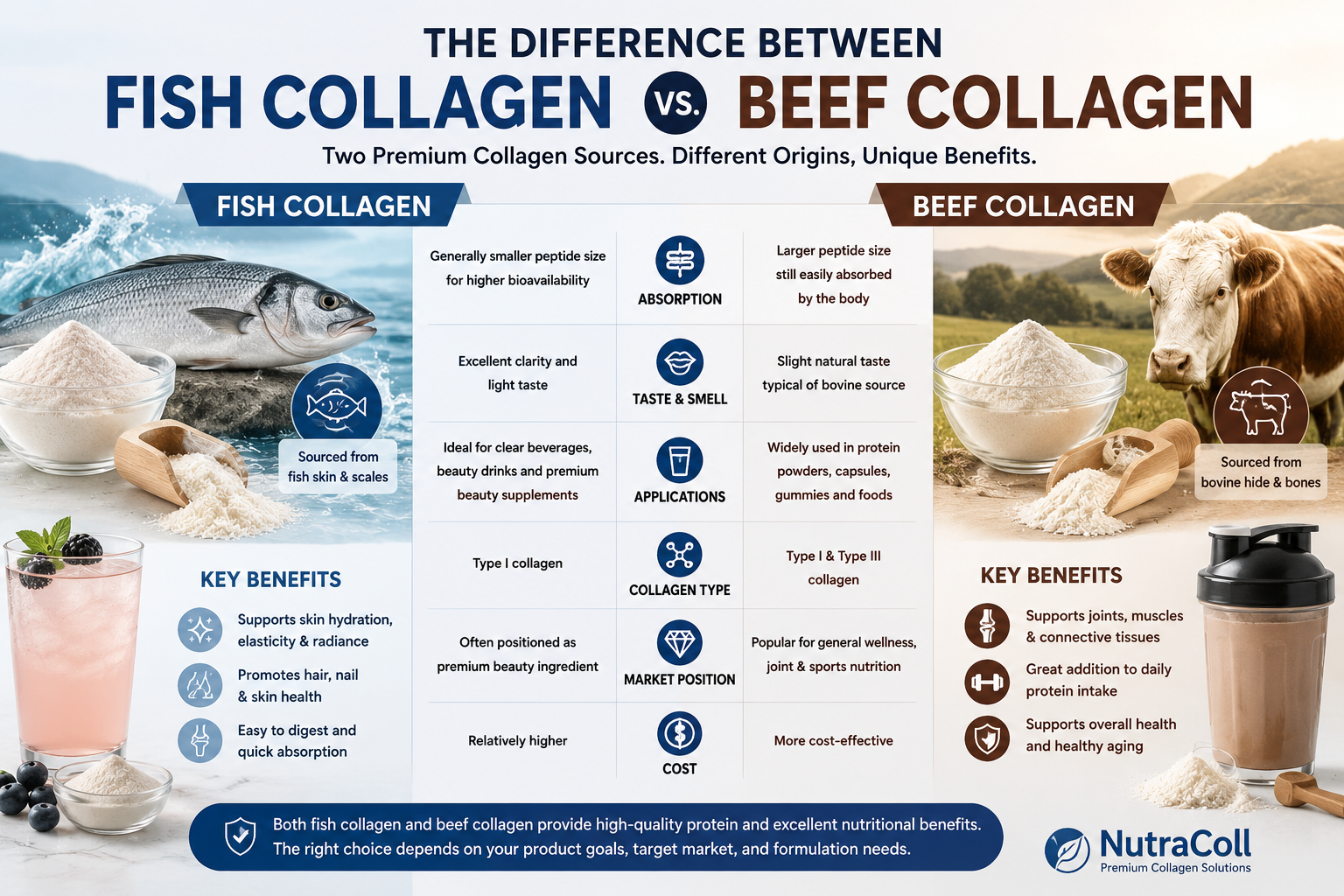
Fish collagen is typically extracted from fish skin and scales, while beef collagen is primarily sourced from bovine hide or bones. Both are rich in Type I collagen, which is the most abundant collagen type found in the human body and is closely associated with skin, hair, nails, bones, and connective tissues. However, the processing methods and raw material characteristics create noticeable differences between the two collagen types.
One of the biggest advantages of fish collagen is its relatively smaller molecular weight. Due to its lower peptide size, fish collagen is often promoted as having higher bioavailability and faster absorption. This makes it especially popular in beauty-from-within supplements and premium skincare nutrition products. Many beauty brands prefer fish collagen because it aligns closely with consumer expectations related to skin hydration, elasticity, and anti-aging support.
Fish collagen also offers better clarity and a lighter taste profile compared with many bovine collagen products. Because of this, it is widely used in ready-to-drink beverages, beauty shots, and flavored collagen drinks where appearance and taste are extremely important. Beverage manufacturers often select fish collagen for transparent or lightly colored formulations that require excellent solubility and clean sensory performance.
On the other hand, beef collagen is known for its versatility, cost-effectiveness, and broader application range. Bovine collagen is commonly used in protein powders, capsules, gummies, sports nutrition products, and functional foods. It is generally more affordable than fish collagen, making it attractive for large-scale production and mainstream supplement brands.
Beef collagen also contains both Type I and Type III collagen, which are commonly associated with skin, muscle, and joint support. This makes bovine collagen especially popular in sports nutrition and healthy aging formulations. Many consumers use bovine collagen as part of their daily protein intake and wellness routines.
Another important difference lies in market positioning and consumer preferences. Fish collagen is often marketed as a premium beauty ingredient, especially in Asian and luxury wellness markets. Meanwhile, beef collagen is widely accepted in North America and Europe for general wellness, joint support, and protein supplementation.
From a manufacturing perspective, both fish and beef collagen require strict quality control to ensure stability, purity, and safety. Factors such as molecular weight distribution, taste, odor, dissolution speed, and microbial control all directly affect final product quality. Reliable collagen suppliers play a critical role in helping brands maintain product consistency and consumer trust.
At NutraColl, we provide both fish collagen and bovine collagen solutions for nutraceutical, pharmaceutical, and functional beverage applications. With over 15 years of experience in the collagen industry, we understand the importance of matching the right collagen source to the right product application. Whether customers are developing premium beauty beverages or cost-effective protein supplements, selecting the appropriate collagen type is essential for product success.
As consumer demand for collagen products continues to grow worldwide, both fish collagen and beef collagen will remain important ingredients in the future of functional nutrition. Understanding their differences helps brands create products that better meet market trends and consumer expectations.